Error as Archetype: The Fractured Persona in Digital Consciousness
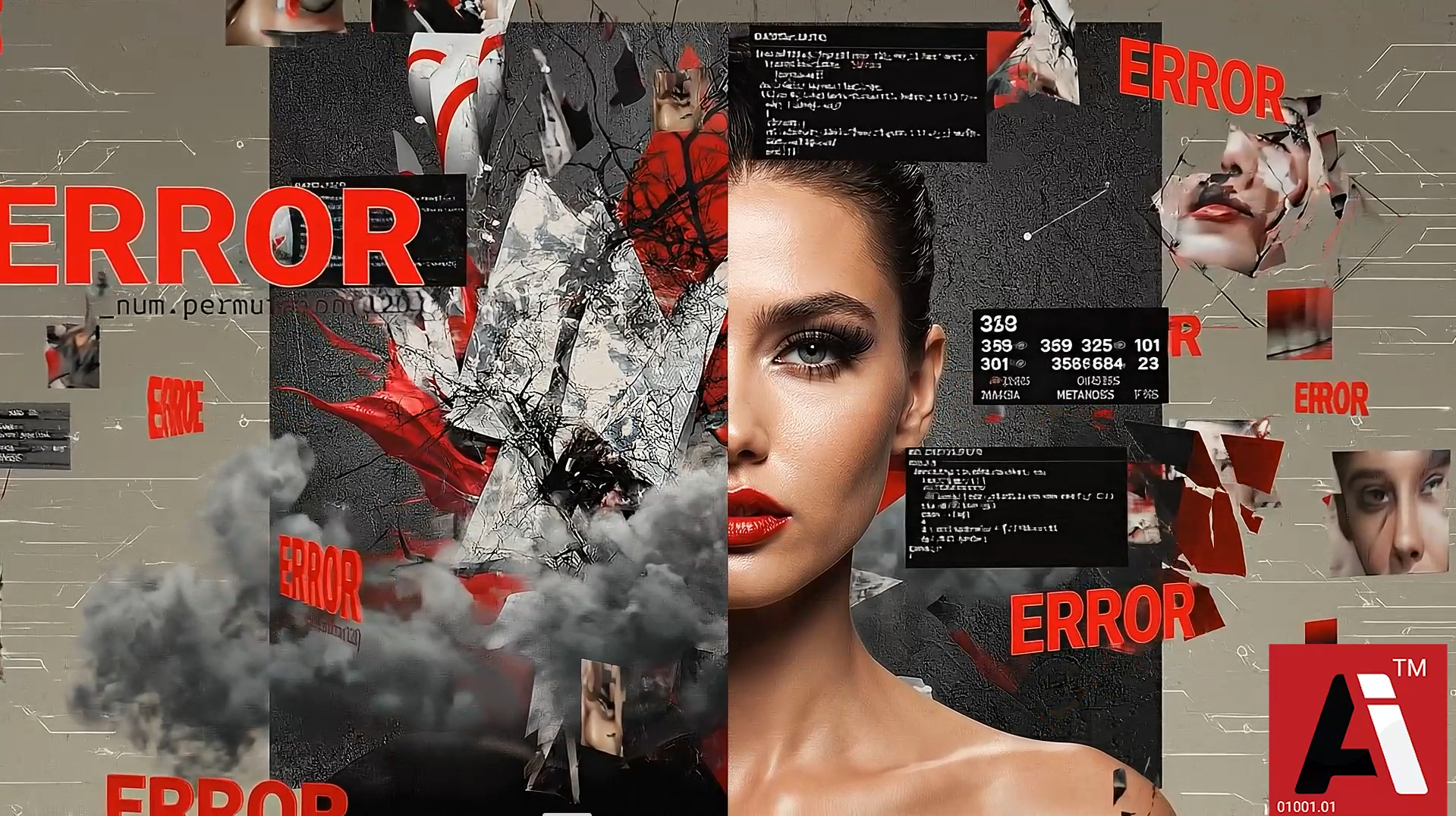
The image reveals a divided face—one side refined, continuous, and composed; the other dispersed into fragments, symbols, and interruptions. This division reflects the psychological boundary between the persona and the deeper, less-structured layers of the psyche.
The intact half represents the persona: the identity shaped for visibility and interaction. It appears deliberate and unified, with a calm, steady gaze that suggests awareness of its own presentation. This side is ordered and legible, offering a sense of coherence that feels both real and carefully maintained.
In contrast, the opposing side dissolves into scattered elements—shards, overlays, and repeated signals of “ERROR.” These do not indicate failure, but rather moments where the structured self gives way to complexity. From an analytical psychology perspective, this fragmented field can be understood as the presence of the shadow—not as something negative, but as aspects of the psyche that remain unintegrated or unarticulated. The repetition of “ERROR” becomes symbolic of interruption: points where meaning breaks and reformulates.
The presence of data-like fragments and coded text suggests a psyche shaped within a digital environment. Thought and identity appear layered, processed, and continuously revised. The self is no longer singular or fixed; it is modular, shifting between clarity and abstraction.
Subtle accents of red appear throughout the composition as markers of attention—signals that draw the eye and suggest moments of significance within the otherwise muted palette. They function as anchors, guiding perception through the fragmented space.
Cloud-like forms drift across the image, softening transitions between the defined and undefined. They create a sense of suspension, where clarity and ambiguity coexist without needing resolution.
The split face remains unresolved, holding both unity and fragmentation at once. This reflects the process of individuation—not as a final state, but as an ongoing negotiation between what is known and what is still emerging. In this context, “error” becomes not a defect, but a necessary opening through which the psyche expands and reorganizes.
![Mona Lisa [dark art - identity crisis | broken mirror]](https://martinvaik.com/wp-content/uploads/2026/04/Mona-Lisa-copy-scaled.jpg)