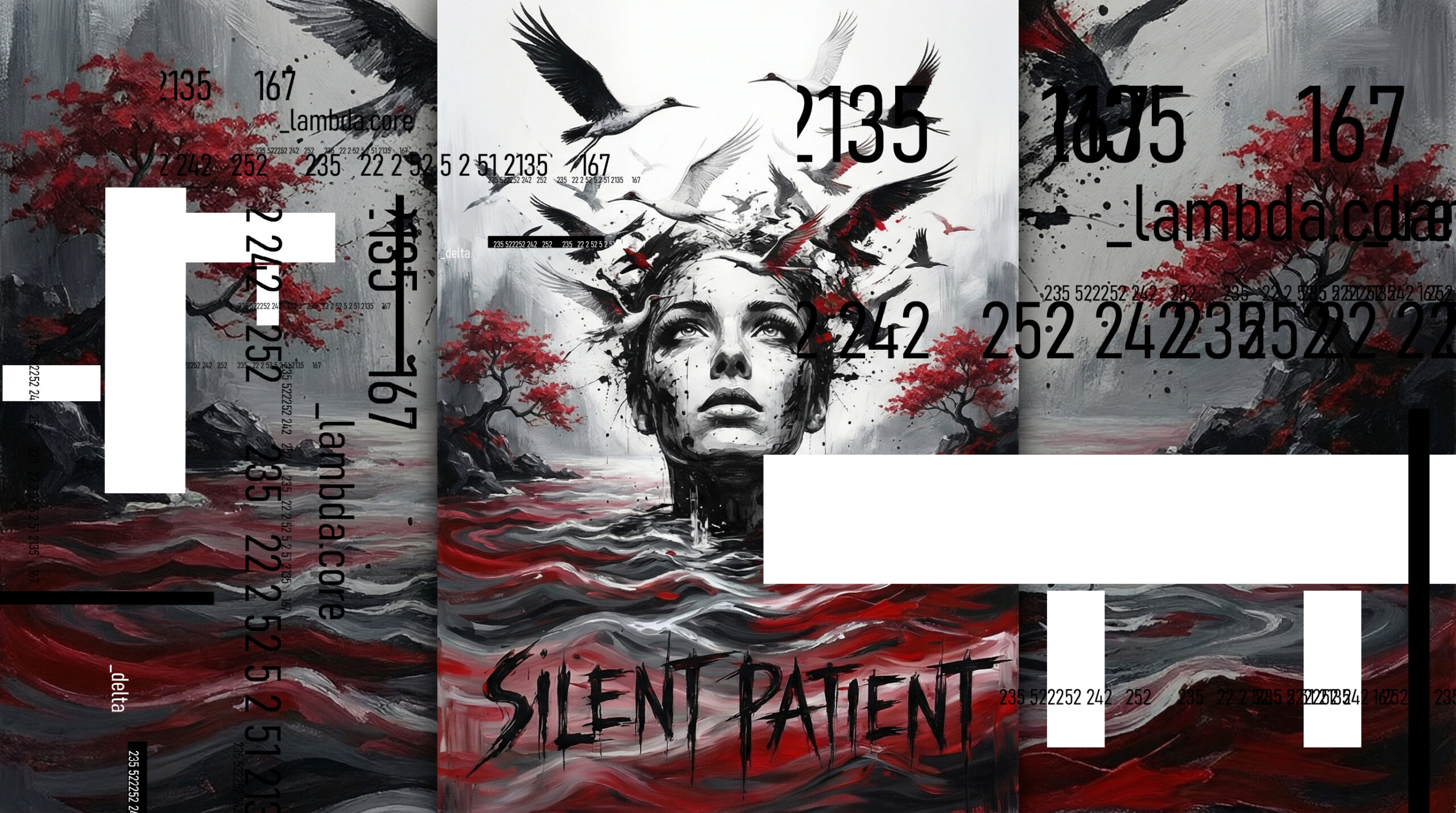
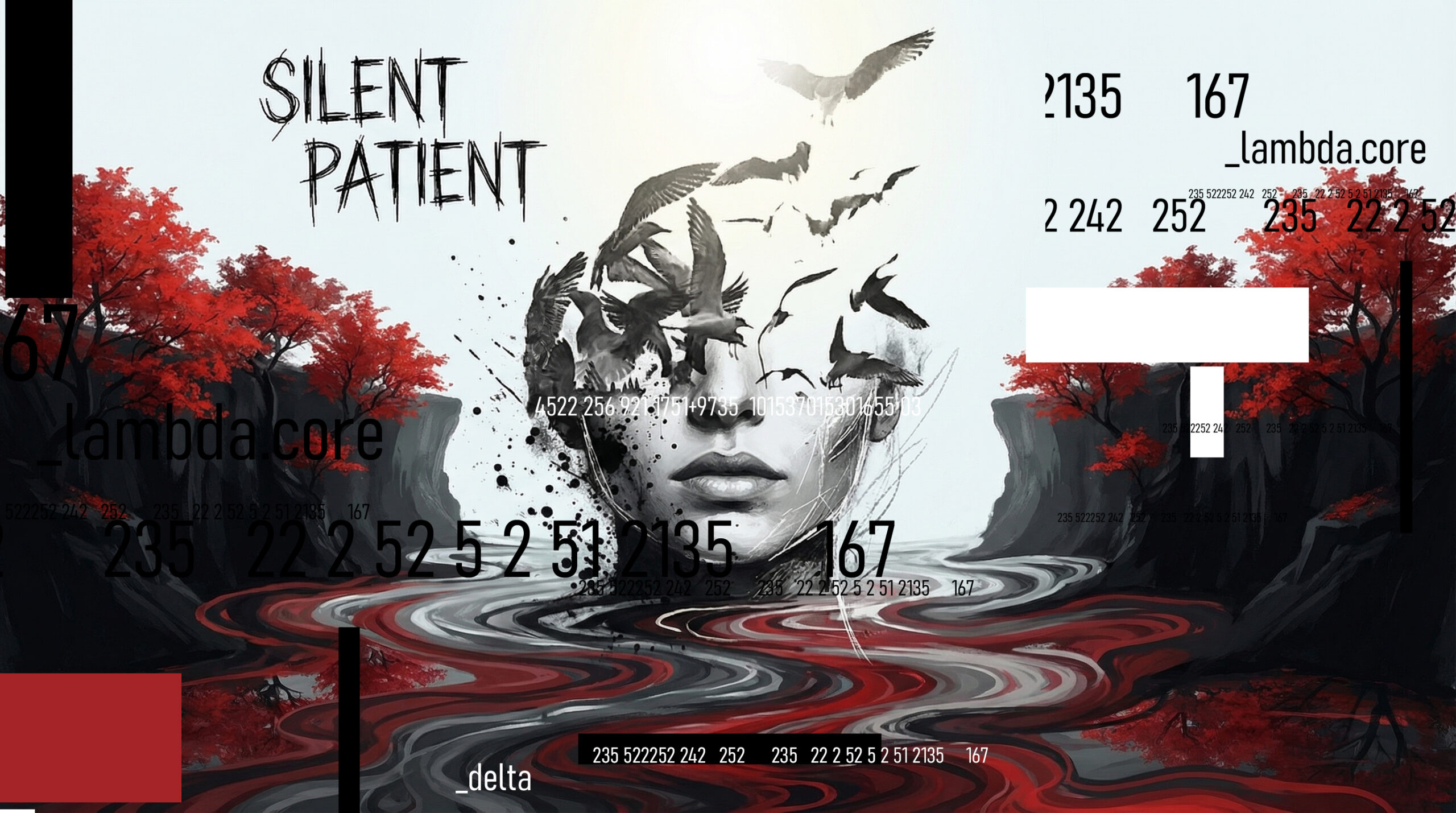
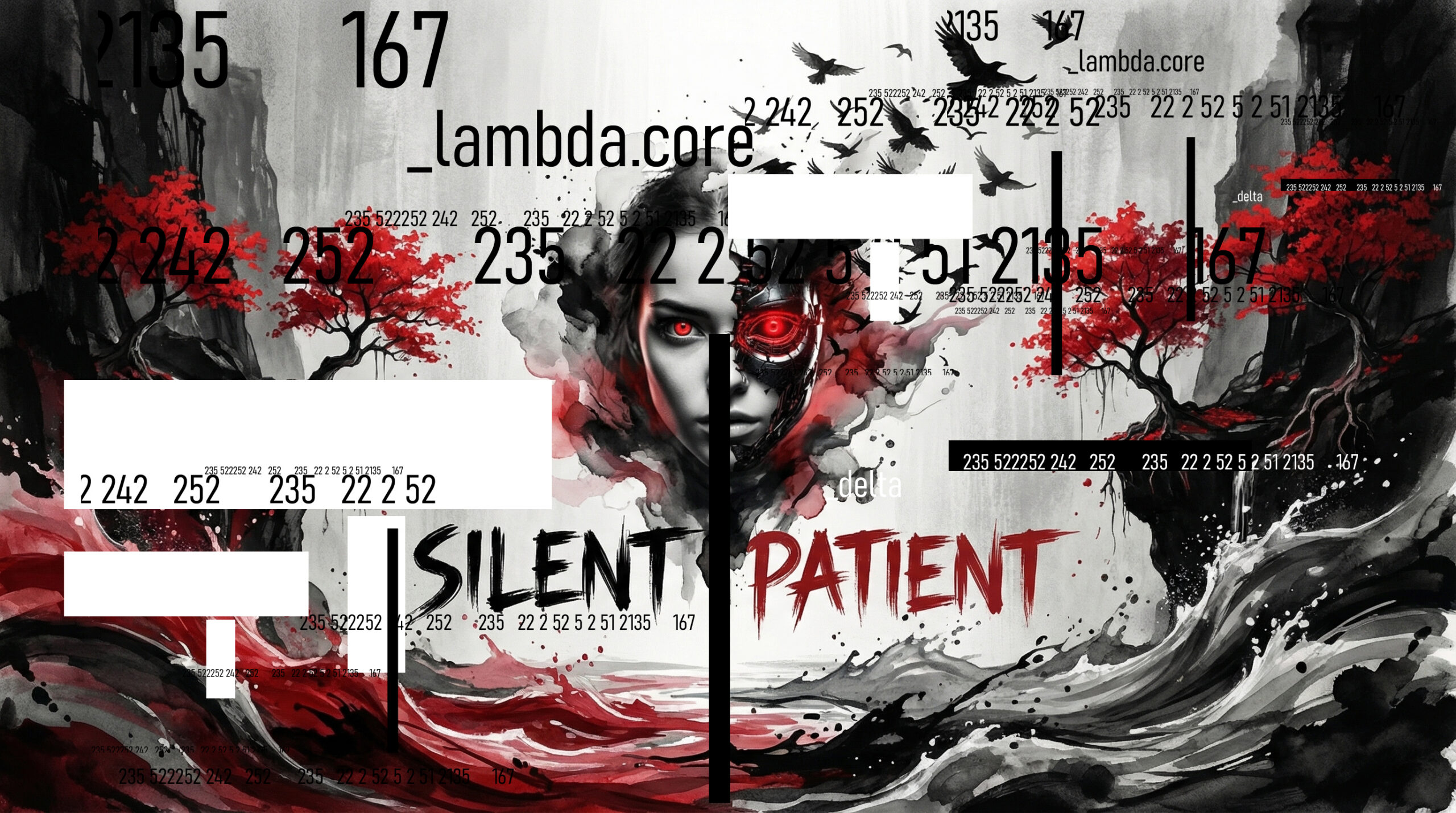
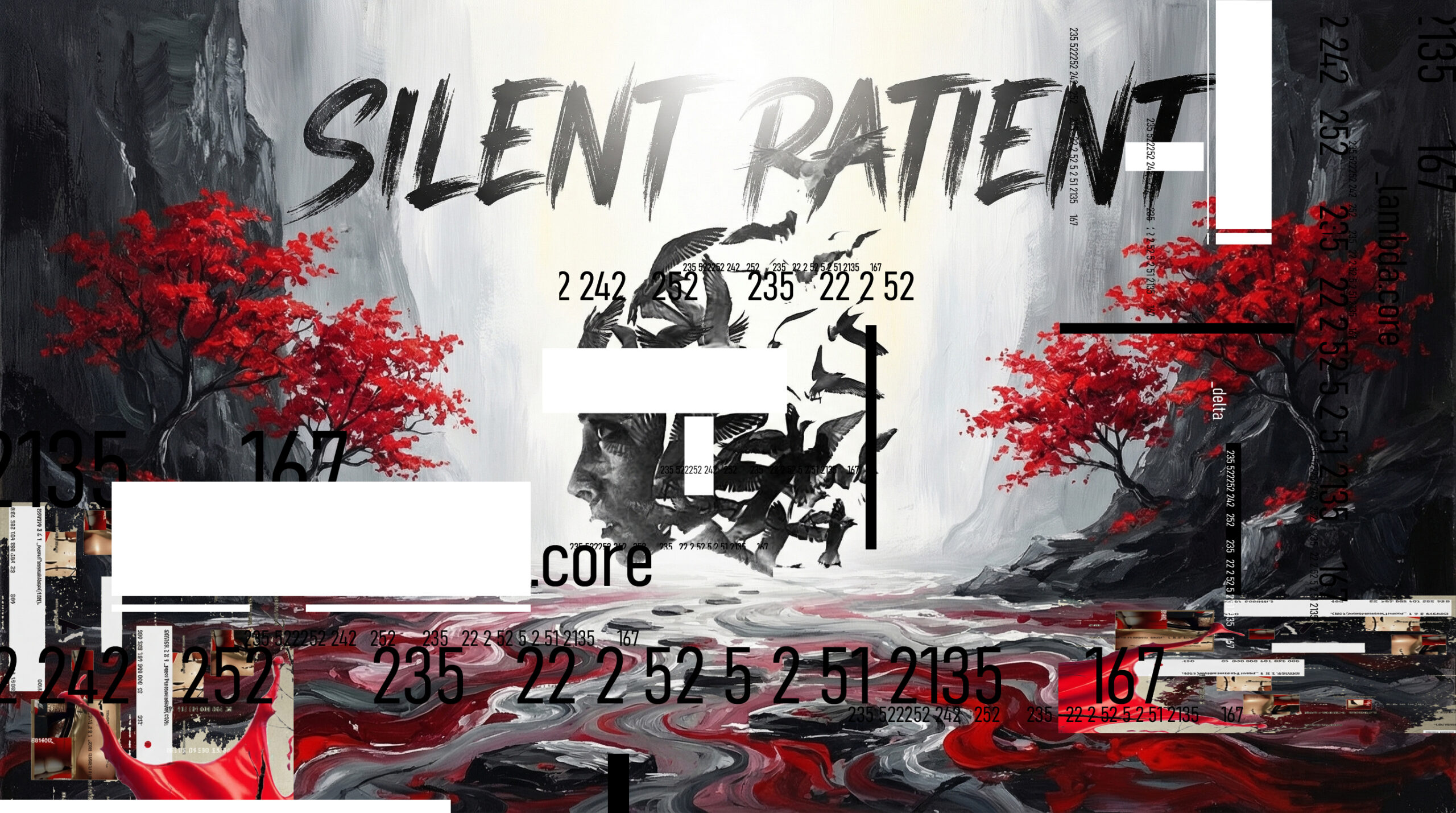
This artwork, titled “Silent Patient,” presents a psychologically charged visual field where fragmentation, silence, and intrusion converge. Through a mixed visual language—combining figurative portraiture, abstract distortion, and data-like overlays—it evokes the internal landscape of a mind under pressure, perhaps fractured by trauma or dissociation.
Formal Analysis
At the center stands a female figure, rendered in grayscale, emerging from a turbulent, almost liquid environment. The composition is vertically oriented, with the figure anchored in the middle while chaos radiates outward. The limited palette—dominated by black, white, and violent reds—creates stark contrast. Red is used sparingly but strategically: in the trees, the flowing liquid, and most importantly, the fractured portion of the face. This selective colorization acts as a visual alarm, guiding the viewer’s eye toward psychological rupture.
The face itself is partially disintegrated. One side appears human, contemplative, and upward-looking; the other is mechanized or broken apart, with cracks and exposed red structures. This duality suggests a split identity—organic versus artificial, emotional versus numbed, conscious versus suppressed.
Overlaying the entire composition are strings of numbers and textual fragments (“_lambda.core,” “_delta”), reminiscent of code or clinical data. These elements flatten the pictorial space and disrupt the emotional reading, introducing a cold, analytical layer that contrasts with the visceral imagery beneath.
Symbolic and Psychological Interpretation
At a symbolic level, the “silent patient” may represent an individual who is observed, analyzed, or diagnosed but not truly heard. The intrusion of numerical data across the body and environment suggests objectification—reducing a human experience into measurable units. This aligns with themes in clinical psychology, where patients can sometimes feel dehumanized by diagnostic systems.
The fractured face is the psychological core of the image. It recalls the concept of dissociation, where parts of the self become compartmentalized to cope with overwhelming stress or trauma. The red interior—exposed, almost mechanical—could signify raw pain or the internal machinery of coping mechanisms. The birds flying out from the fractured side may symbolize thoughts escaping control, or perhaps the fragmentation of identity dispersing into the external world.
Water, traditionally associated with the unconscious (as in Jungian psychology), engulfs the figure up to the shoulders. However, this is not calm water—it is turbulent, almost violent. It suggests that the unconscious is not a place of quiet depth but of overwhelming force. The figure’s upward gaze may indicate a longing for transcendence, clarity, or escape from this internal flood.
The red trees in the background introduce another layer of meaning. Trees often symbolize life, growth, and rootedness. Here, their unnatural color suggests distortion—life altered by trauma, memory, or perception. They stand on either side like witnesses or silent observers, reinforcing the theme of being seen but not understood.
Thematic Reading
The artwork explores the tension between visibility and silence. The patient is hyper-visible—exposed, analyzed, dissected—but remains voiceless. The textual overlays act like intrusive thoughts or external labels imposed upon the self. There is a sense that identity is being overwritten by systems—technological, medical, or societal.
This aligns with contemporary anxieties about the intersection of humanity and data. The presence of code-like text suggests that the psyche is being translated into information, raising questions about what is lost in that translation. Can emotional suffering be quantified? And if it is, does it still retain its meaning?