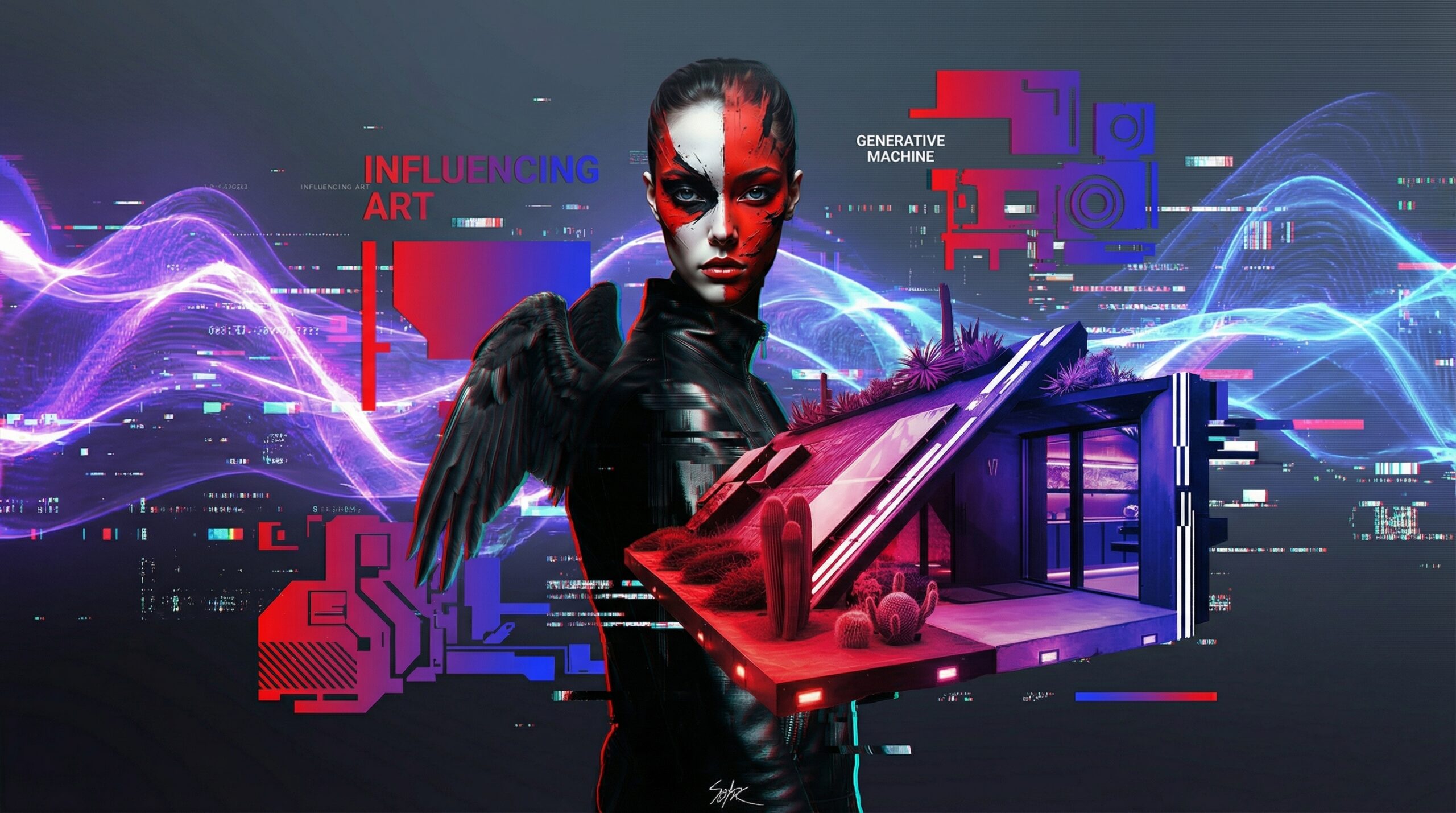
This image initially feels like a visual manifesto—a meeting point between human, machine, and imagination. At the center of the composition stands a hybrid figure whose face is split into two contrasting halves: red and white. This dualism suggests both a fractured identity and the creative tension between the human and the artificial. The face is not merely a portrait, but a symbol—the artist as an intermediary between two worlds.
The figurative element is fused with a technological aesthetic: glitch effects, digital noise, and geometric forms create the impression that reality itself is breaking apart and reconstructing. These interruptions remind us that creativity today no longer emerges solely from organic experience, but also from algorithmic randomness. The phrases “Influencing Art” and “Generative Machine” are not just titles—they are declarations. Art is no longer only expression, but also a process shaped by machines.
The figure’s wing is also striking—it carries classical symbolism (angelic presence, freedom), yet here it feels more like a synthetic addition, almost a biomechanical implant. This creates a paradox: does technology give us wings, or does it take away our humanity? The answer remains ambiguous.
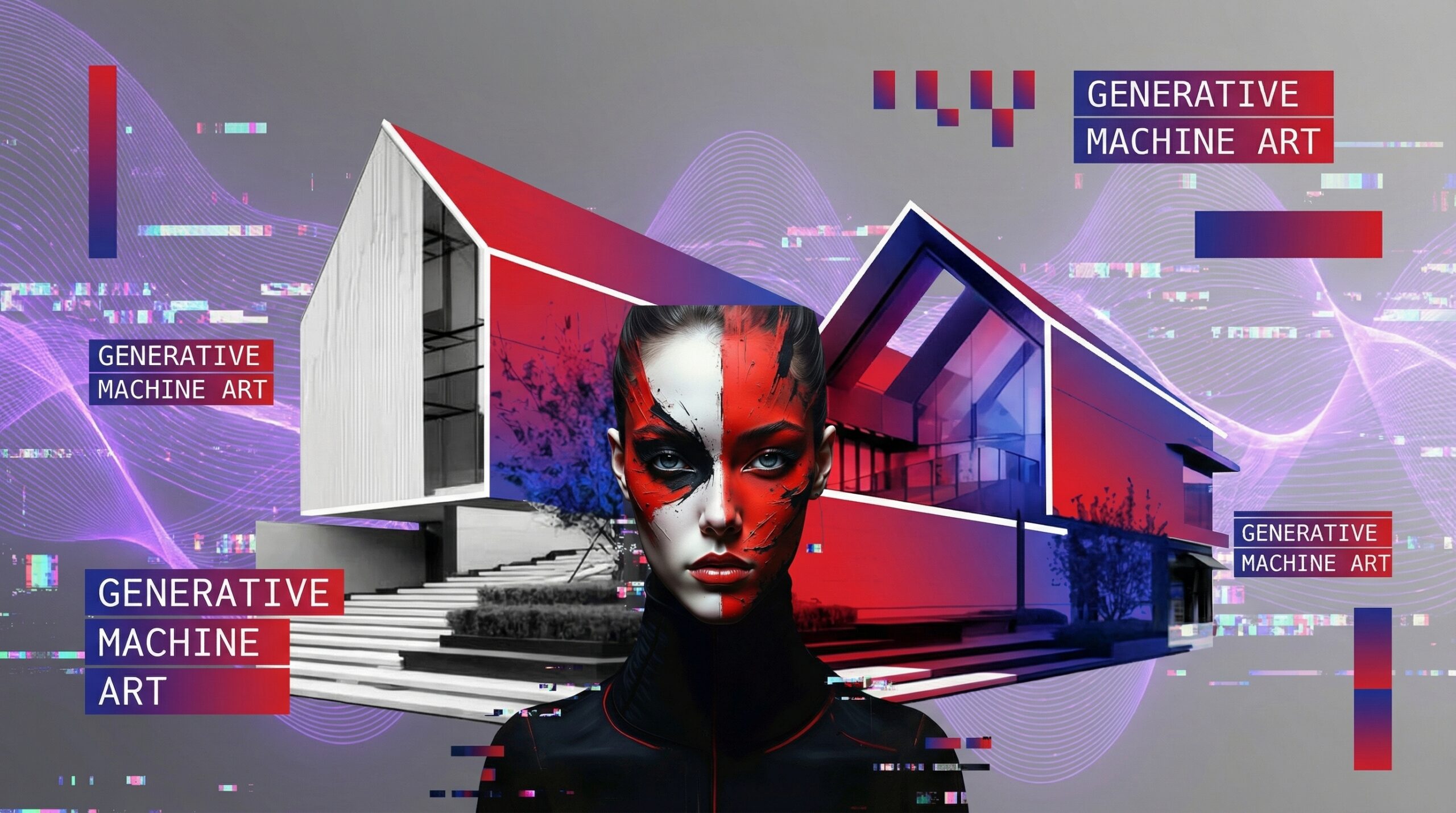
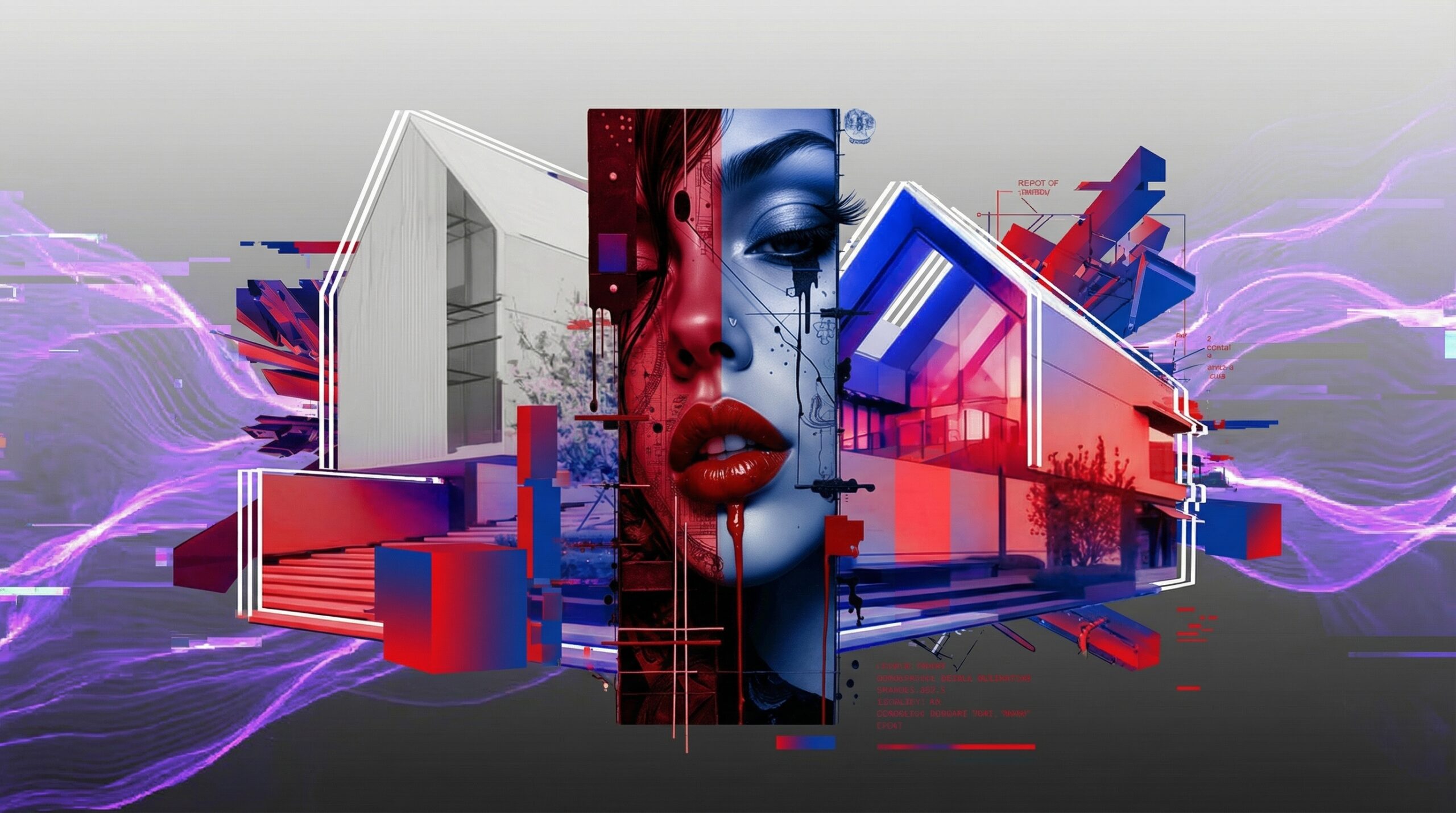
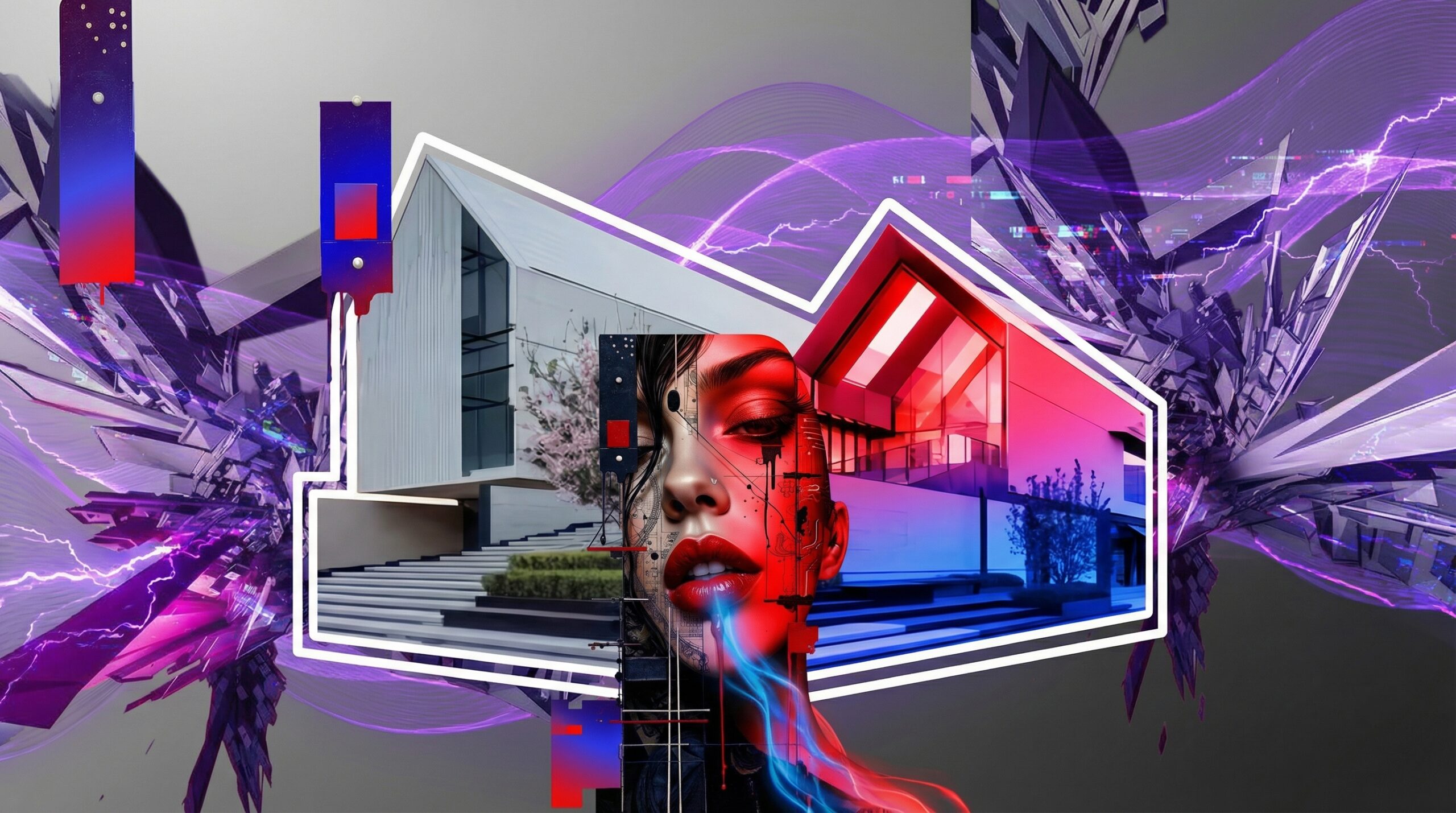
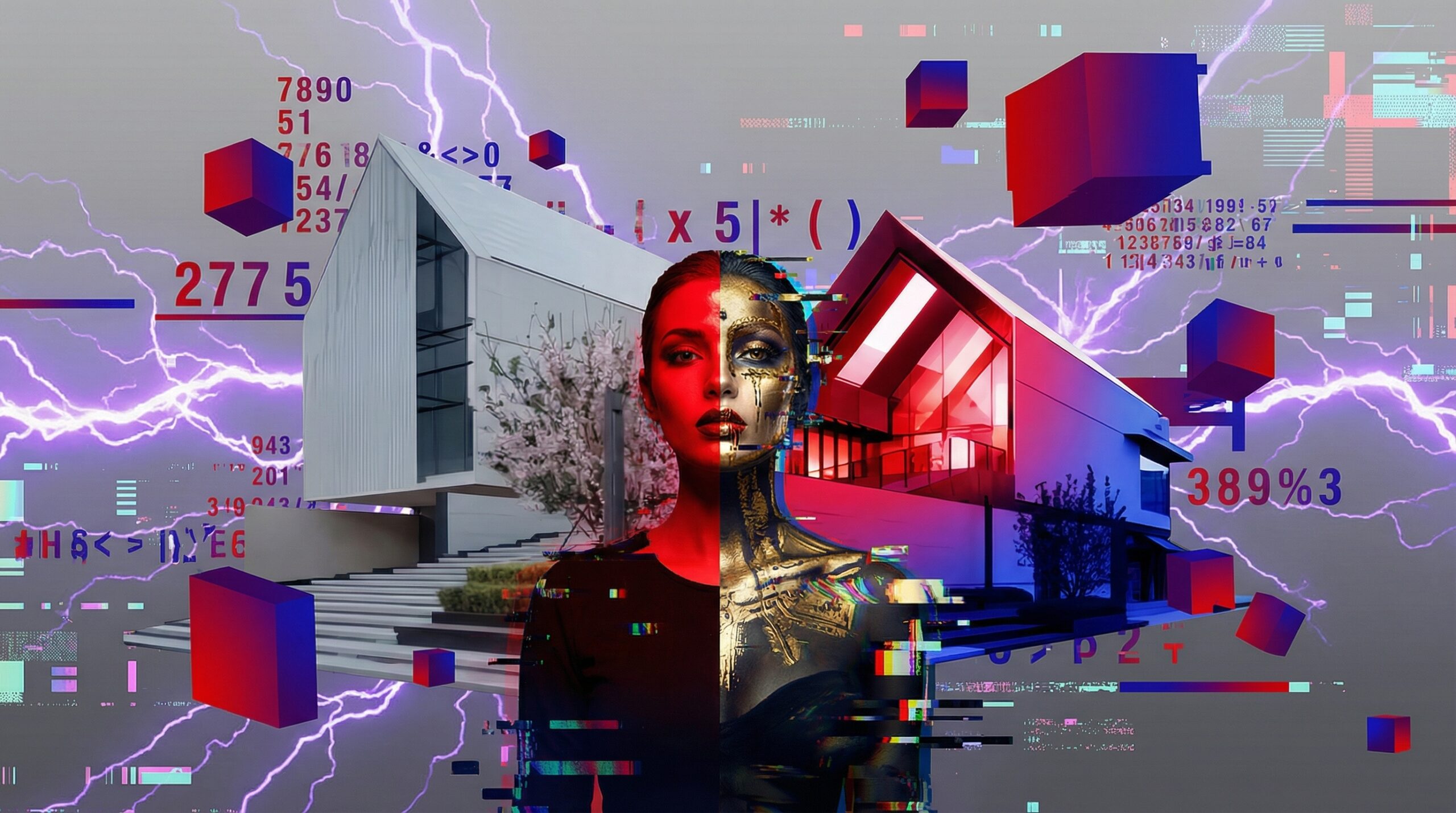
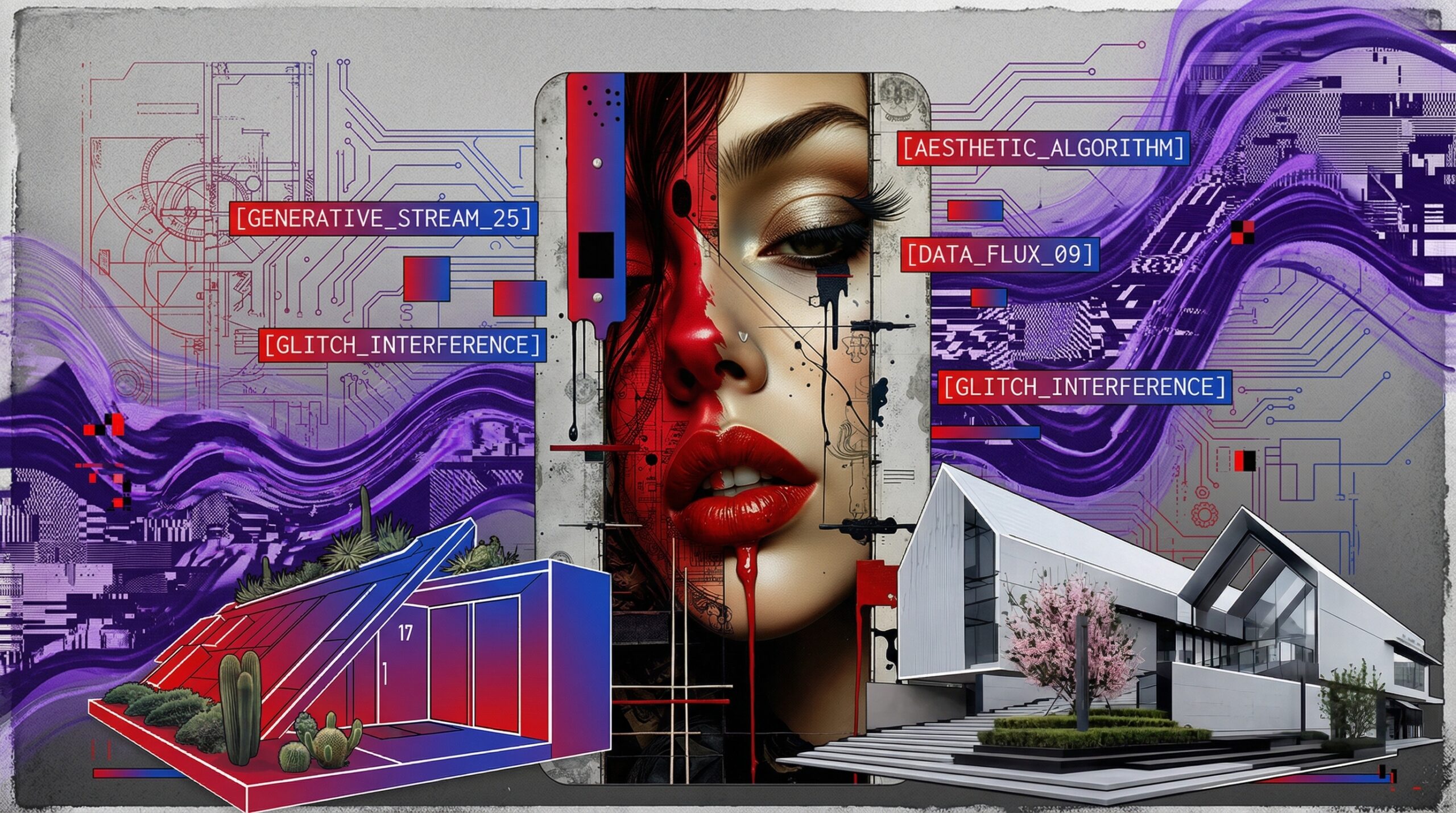
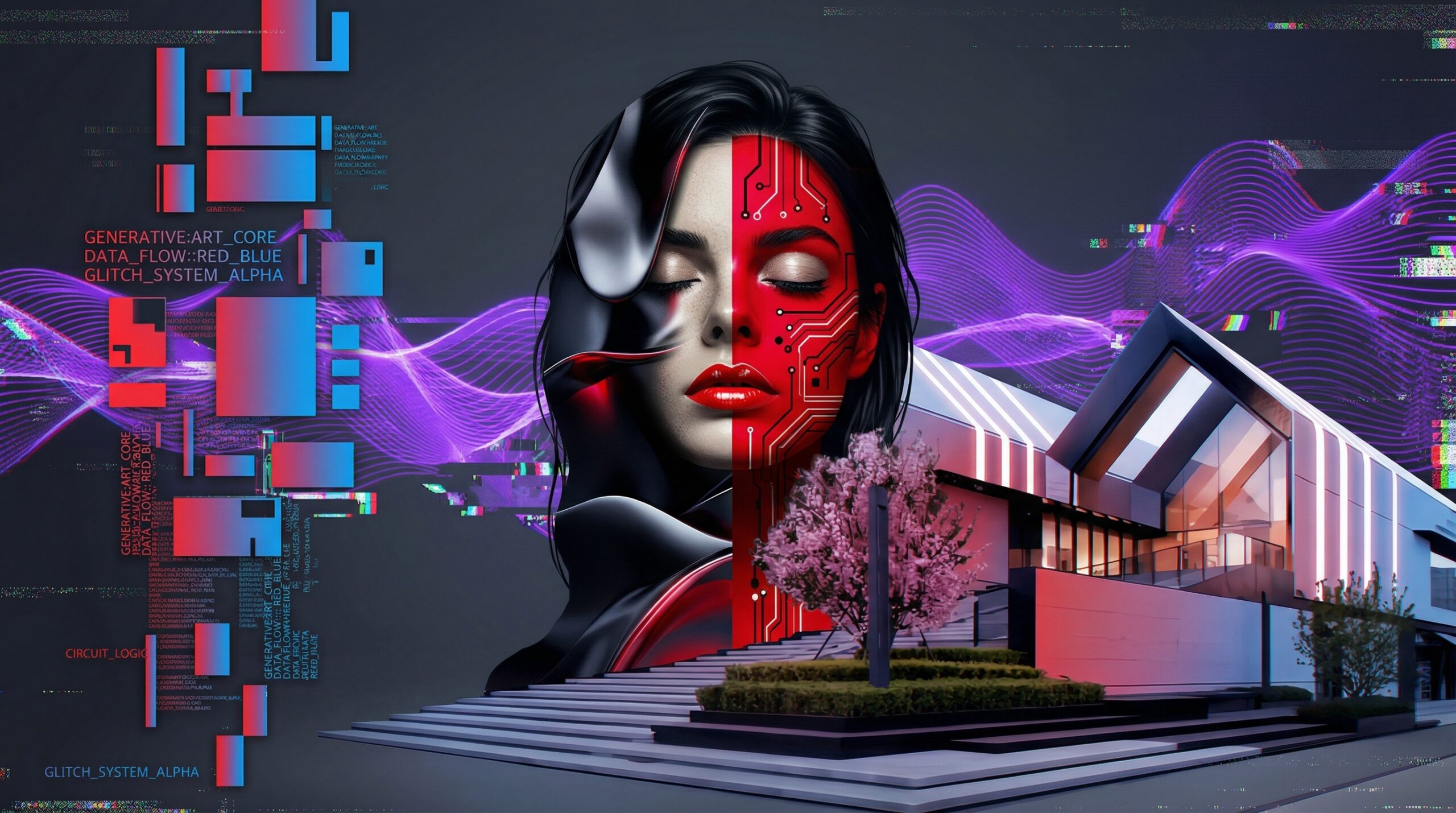
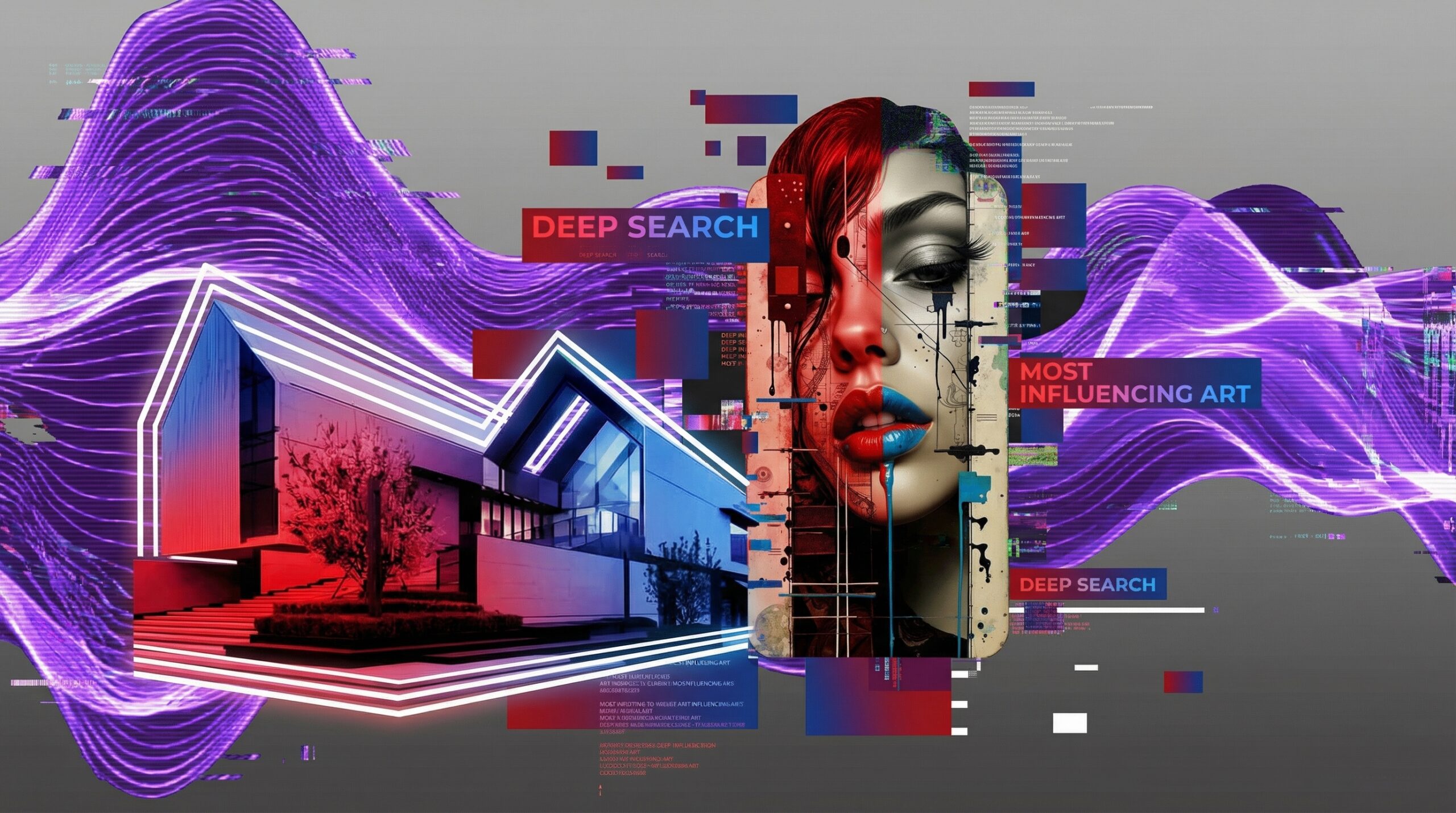
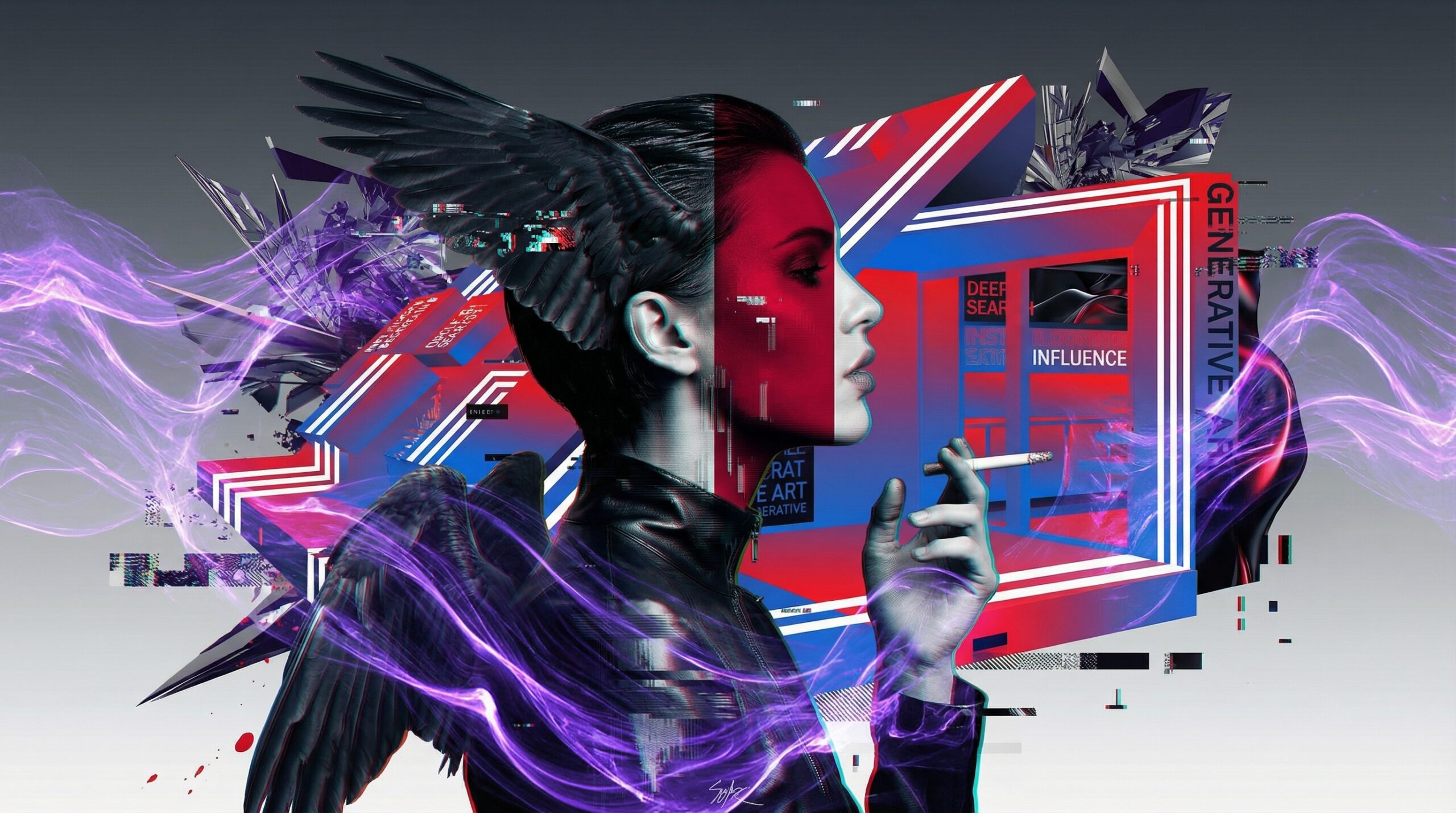
On the right side of the image, a floating futuristic house adds an architectural dimension to the work. It is not merely a dwelling, but an idea—a human-made environment that exists simultaneously in physical and digital realms. The cacti and natural elements contrast with the cold, neon-lit interior, raising the question: will nature persist in the future, or will it become a decorative fragment within an artificial world?
The use of color—intense contrasts of red, blue, and purple—creates emotional tension. Red evokes energy, conflict, and creativity, while blue suggests technology and cold rationality. Their fusion is not harmonious, but pulsating and dynamic, as if in constant transformation.
In conclusion, this work can be interpreted as a visual discourse on generative art. It does not offer simple answers, but poses questions: who is the creator? Where does the human end and the machine begin? And is art shaped by algorithms less authentic, or perhaps the purest expression of a new era?